
★ LOS ANGELES FANTASY FEST 2026 ★ LIVE IN LOS ANGELES ★ ONLINE ★ NOVEMBER 20–21 ★ SKIPTOWN PLAYHOUSE ★ THE CAT’S CRAWL ★ HORROR 🔪ིྀ SCI-FI ★ ANIMATION 🏆 THE OBSCURA AWARDS

NOV 20-21, 2026



‘Backwards Dad’ Review: A Moving Race Against Memory, Regret and Lost Time
Felix Nunez blends science fiction, drama and touches of dark humor in a heartfelt story about a man losing his adulthood just as he discovers what it means to become a father.
Backwards Dad begins with music that immediately gives the film an emotional weight.
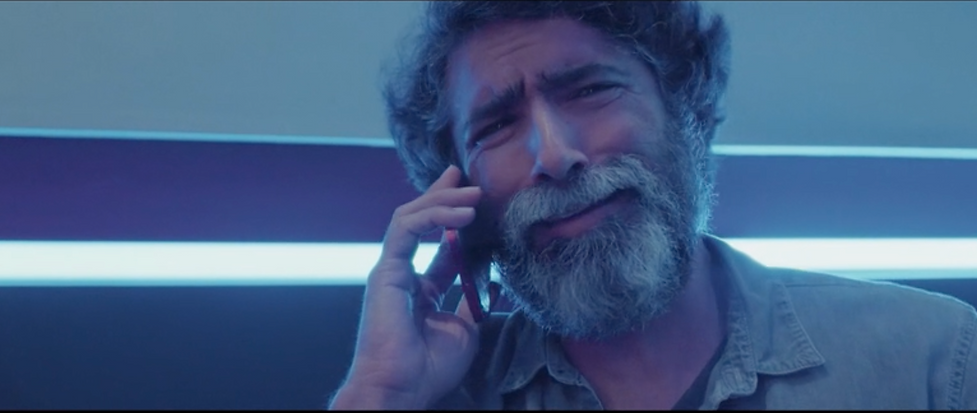
The opening introduces Ken Donovan in a way that feels rough, lonely and almost disconnected from the life around him. He appears like a man who has fallen far from whatever version of himself once existed, searching through discarded objects and moving through the world without any clear direction.
From there, the film begins building something much larger than a simple story about illness.
Ken is a former music producer whose life changes after he develops Chrono-Neural Regression, a fictional condition that causes his mind to age backwards. While his body remains adult, his identity, memories and emotional understanding begin slipping toward increasingly younger stages of life.
The premise contains elements of science fiction, but the emotions are completely human.
Ken is forced to confront the choices he avoided, the relationships he damaged and the son he never knew. The tragedy is that he finally begins understanding the importance of connection at the exact moment when he is becoming less capable of holding onto it.
Felix Nunez handles that idea with considerable sensitivity.
The film does not treat Ken’s condition only as a clever concept. It uses it to explore regret, addiction, emotional immaturity, dementia and the fear of losing the person we believe ourselves to be.
Michael Rodriguez gives a strong and committed performance as Ken. He carries a difficult role because the character must change gradually without making the transformation feel exaggerated or theatrical.
Rodriguez shows Ken as a flawed man, but never as someone beyond understanding. There is frustration, selfishness and nostalgia in him, but also vulnerability and a growing desperation to recover the connections he failed to value.
As the condition progresses, the performance becomes more emotionally exposed. The defenses of adulthood begin falling away, revealing a person who is frightened, confused and still searching for the affection he may have missed in childhood.
That is one of the most affecting ideas in the film.
Ken’s regression does not simply make him younger. It brings forward the needs he has spent his life hiding. The film suggests that many adults continue carrying the disappointments, fears and emotional absences of childhood, even when they have learned how to disguise them.
The scenes between Ken and Ashley are particularly strong.
Alyssa Anne Austin brings warmth and emotional restraint to Ashley, creating a believable history between the two characters. Their shared moments do not depend on excessive explanation. The performances communicate regret, disappointment and the remains of affection that never entirely disappeared.
There is beauty in watching them occupy the same space again, especially because the audience understands that time is working against them.

The rest of the cast is equally solid. Aulio Ivan and Adriana Cuba contribute to a world that feels grounded, helping the film maintain its human dimension even when the story moves further into its speculative premise.
Nunez deserves credit for directing the ensemble with consistency. Every performance feels as though it belongs inside the same film, and the emotional tone remains controlled throughout.
The cinematography is another major strength.
San Diego is photographed with brightness and beauty, but that surface appearance contrasts with the emotional deterioration taking place inside Ken. The locations feel open and alive while the character becomes increasingly trapped within his own mind.
There are many beautifully composed shots throughout the film, and the camera work gives the story a polished, cinematic quality. The images remain clear and controlled without losing the intimacy needed for the more personal scenes.
The sound design is especially sharp.
Small details are given presence, and the audio helps make Ken’s changing perception feel increasingly unstable. One particularly unsettling sequence involving insects emerging around him pushes the film briefly toward psychological horror. The image is disturbing, but the sound makes it even more effective.
It is a strange, frightening moment that shows how vulnerable Ken’s reality has become.
The music is equally important. It supports the story from the opening and continues guiding its emotional movement without overwhelming the performances. The score understands when to create sadness, when to introduce tension and when to allow a moment of humor to breathe.
Those lighter moments matter.
Although Backwards Dad deals with painful subjects, it is not relentlessly bleak. There are funny exchanges and moments of human awkwardness that make the characters feel more natural. The humor gives the audience room to connect with Ken before the story reaches its most emotional stages.
The film also succeeds because it allows the science-fiction concept to remain understandable.
The fictional condition does not require complicated exposition. What matters is simple: Ken is losing time in the wrong direction. Every day brings him closer to forgetting the people he is only beginning to understand.
That idea creates an effective mixture of drama, thriller and science fiction. There is emotional suspense in wondering how much of Ken will remain and whether he will reach his son before his memories disappear completely.
The story gradually leads toward an ending that is beautiful, painful and deeply satisfying.
Without revealing its final moments, the conclusion brings the film’s themes together with real emotional force. It understands that connection does not always arrive in the form we expect and that love can still matter even when memory begins to fail.
The ending is exactly the kind that stays with the audience after the film is over.
It does not attempt to erase Ken’s mistakes or offer an easy solution. Instead, it finds meaning in the simple desire to reach another person before it is too late.
Selected for the Los Angeles Fantasy Fest 2026, Backwards Dad is a heartfelt and entertaining feature that uses a science-fiction premise to examine very real human fears.
Felix Nunez delivers confident direction, strong performances, beautiful cinematography and a story with genuine emotional purpose. Michael Rodriguez gives the film its center, creating a version of Ken who is difficult, funny, damaged and ultimately moving.
The result is a film about time moving in the wrong direction—and about finally understanding love, family and presence when almost everything else is beginning to disappear.
Production Details
Director, writer and producer: Felix Nunez
Producer: Aleah Blaisdell
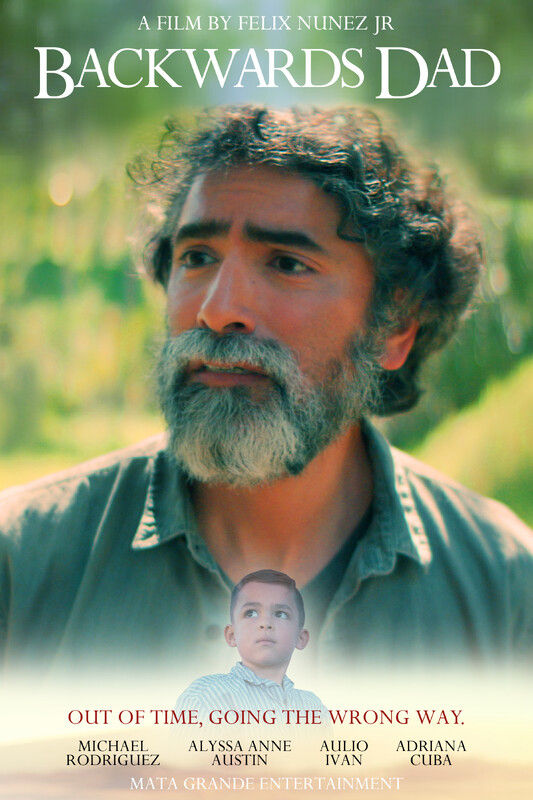
Cast: Michael Rodriguez, Alyssa Anne Austin, Aulio Ivan and Adriana Cuba
Country: United States
Language: English
Year: 2026
Runtime: 1 hour 2 minutes
Genres: Science fiction, drama and thriller
Format: Digital, color, 16:9
By Darwin Reina 19 August 2026
Read more on Medium.com
Click the Medium logo below to read more reviews.
